Yosemite Elopement Logistics: What to Expect + How to Plan a Smooth Day
Bottom line: Yosemite elopements require more logistical planning than many locations, but those logistics are predictable once you understand how the park works. Most of that complexity becomes manageable and straightforward with the right context. You don’t have to figure it out on your own. I guide you through the park’s rhythms so you can feel confident making decisions for your plan and stay present with each other on your elopement day.

If you’ve spent any time in forums or Reddit threads while researching a Yosemite elopement, you’ve likely seen the same concerns surface on repeat: crowds, permits, logistics, timing.
I’m a Yosemite elopement photographer and former park employee and I want to narrow that conversation down to what actually matters and what does not.
Most of what you’ll find in forums centers on crowds, permits, road closures, parking, timing. Those concerns are grounded in reality; they just aren’t all equally likely, or equally disruptive. Folks tend to discuss rare edge cases alongside everyday conditions, and over time it can make the park feel unpredictable or chaotic.
Having lived and worked in the park, I know that in practice, Yosemite runs on patterns. Once you understand when and why those pressure points show up, you can make clear decisions that avoid them entirely or move through them without it affecting your day.
Yosemite’s patterns are not abstract or impossible to pin down. Seasonal road closures are routine, daily traffic patterns are generally very predictable, the flow of visitors and crowds are actually fairly easy to anticipate, and seasonal variables follow a pattern that makes decisions easy once you know what you want and what you’re willing and unwilling to trade off.
Once you can read those rhythms, planning stops feeling so reactive, and starts feeling like a series of straightforward decisions about timing, location, and movement.
Most Yosemite logistical challenges come down to a small set of recurring friction points. These are the things that tend to create stress in real time if they are not accounted for ahead of time. They are also the things that become straightforward once you know how to plan for them.

Don’t stress. I’ll take you by the hand through it all!
What People Over-estimate When Planning a Yosemite Elopement
Yosemite Elopement Permits: Easier Than They Seem
Permits tend to carry more weight in elopement conversations than they do in practice.
People talk about permits as if there is a massive test or process or trick to getting one (there’s not, even if it’s hard to get a hold of the permit office at times), and if you’ve been on the forums, you’re probably seeing some conflicting information (in reality, permitting is super consistent. Yes, you need one!).
While it’s true that your elopement can’t happen without one (even if it’s only the two of you!), the process for getting a Special Use Permit is structured, simple, and ceremony regulations are clear and easy to follow.
I promise you, this is simply one of those times where the unknown seems scarier than it actually is. Once you know how the application works, where ceremonies can be held, and what the limitations actually are, the process becomes straightforward.
Planning within those boundaries is part of working with a national park, not a sign that something is complicated or at risk of falling through.
You can find an overview of the permitting process in my guide, How To Elope In Yosemite. For a more specific deep dive on Yosemite elopement and wedding permits (formally called “Special Use” Permits), check out my Yosemite Elopement Permit Guide.

We’re just people doing people stuff on a rock in outer space
Can You Have Privacy in Yosemite? (Yes, With the Right Plan)
Crowds are real in Yosemite, but so is solitude. Planning conversations online often treat these as mutually exclusive, which leads people to assume that any sense of privacy in Yosemite is difficult to achieve. In practice, privacy is less about finding an empty park and more about timing, positioning, movement, and managing expectations (yes, you’ll likely see people about, no, it won’t ruin your day!).
The same location can feel completely different depending on when you arrive, how long you stay, and just how far “left or right of center stage” we go. Small shifts in timing or choosing to step slightly off the main flow of traffic can create space without needing to avoid popular areas entirely.
Privacy in Yosemite is not always 100% tied to location and it’s far more often about knowing how to move through a shared space in a way that still feels grounded and personal. This is the sort of know-how I bring to every elopement in Yosemite :)
Yosemite Weather & Road Closures: Predictable, Not Random
Weather and road access are often framed as unpredictable forces that can disrupt a plan at any moment. In Yosemite, most of these variables follow seasonal rhythms.
Snow impacts higher elevation roads in winter and spring. Water flow changes throughout the season. Summer brings heat and occasional smoke. These are usually not surprises; they are part of the annual cycle of the park. That said, during the more weather-heavy months, storms and rockfall can occur with little to no notice, affecting some (likely) or all (far less likely) of the park.
What tends to create stress is not the conditions themselves, but treating them as random. Once you understand what is typical for your timeframe (read my month-by-month breakdown of Yosemite here!), you can make decisions that align with those conditions. That might mean choosing locations that remain accessible, planning around temperature shifts, or setting expectations for what the landscape will look and feel like.
When approached this way, weather and road conditions stop being disruptions and become routine background noise in the environment you are intentionally stepping into.
What to Wear (and How to Handle Attire Logistics in Yosemite)
Attire in Yosemite tends to get overcomplicated in planning conversations. In practice, it is muuuuch simpler.
Most couples change on location. That can mean a quiet pullout, a less trafficked area, or simply stepping into the trees for a few minutes. It is more normal than people expect, and with a bit of awareness around timing and positioning, it actually feels fun and cute, not a pain point.
Transport is also straightforward. Dresses can be draped over a pack and secured, suits can be carried or worn in stages, and I carry a larger bag so you are not managing everything yourselves. You do not need a complex system here, just a plan.
Footwear follows the same logic. Most couples move through the park in hiking shoes and change if they want a different look once we are on stable ground. That flexibility keeps movement easy without limiting how things look in photos.
Conditions are part of the environment and the story of your elopement, not a problem to solve! Dirt on a dress, wind in your hair, temperature shifts throughout the day. These are expected. Bringing layers, extra pins, and a small amount of foresight keeps things comfortable without overengineering it.
If you want additional support, you can also bring in someone like Wild Brides Backcountry to assist with carrying, setup, and transitions. For some couples, that added layer of support makes the day feel even more relaxed.
Managing your beautiful dress and necessary hiking gear is all just part of the experience. It feels fun, like wearing your prom dress to In-N-Out :)
Do Yosemite Park Closures Affect Elopements?
Here’s the big one: full park closures are one of the most commonly cited concerns in planning conversations, and one of the least likely to affect your day in the way people imagine.
What people are usually referencing are seasonal road closures or temporary, localized issues. Those are part of how Yosemite operates. They follow patterns, are communicated in advance, and are not random events that appear without warning.
A full, unexpected shutdown of the park is truly rare. Even in recent cases of government shutdown, the park was still open to visitors.
What matters is understanding which roads are open during your season, and how that changes access, as we plan your elopement. Once that is accounted for, “closures” stop being an unknown and become part of the baseline you plan within.
The Things People Under- estimate About Yosemite Elopement Logistics
No Cell Service in Yosemite: How to Plan Communication
Cell service inside Yosemite is inconsistent and, in many areas, nonexistent. This is not a rare occurrence or a worst case scenario. It is the baseline condition in large portions of the park. Cell service is unreliable enough that you should assume you are offline once you enter the park, and that clean assumption makes it easier to tighten plans. If service appears, great. If it does not, you are not left scrambling.
This matters more than people think, especially when guests are involved. It affects directions, vendor coordination, timeline adjustments, and simple things like letting someone know you are running ten minutes behind. In practice, Yosemite rewards plans that are specific before you lose service. Download maps. Screenshot directions. Use exact meeting points. Have a backup plan if someone misses the first location.
Where people get into trouble is assuming they will be able to coordinate in real time. Checking in on timing, sending updated locations, or troubleshooting a missed turn often is not possible once you are moving through the park.
What matters here is not “having service,” but removing reliance on it. That means confirming meeting locations in advance, using clearly defined and shared map pins, and building a plan that does not rely on live updates. If guests are involved, it also means giving them simple, fixed instructions rather than flexible ones.
When communication is handled ahead of time, the lack of service stops being a problem and becomes a non-factor.
Yosemite Meeting Points & Navigation: Avoiding Confusion
Yosemite is not a place where you want to be troubleshooting directions on the way to your ceremony.
Many locations have similar names, multiple access points, or pins that do not correspond exactly to where you actually need to go. “Meet at Tenaya Lake” is not a plan. “Meet at the easternmost pullout on the south side of the road at these coordinates” is a plan. Yosemite has duplicate pins, broad areas with multiple parking zones, and enough scale that a vague location can create real confusion. It is also common for people to drop a pin in a scenic area that is not accessible by car, or that requires additional walking they did not plan for. This is one of the most common sources of unnecessary stress.
What matters is precision. Not just “meet at Tunnel View,” but which parking area, which pullout, which side of the road, and how long it takes to get from the car to the exact spot.
A clear plan accounts for where you park, how you move from the car to the location, and how long that transition actually takes. Once that is dialed, there is very little room for confusion.
Yosemite Drive Times: Why Everything Takes Longer Than You Think
Distances in Yosemite are misleading. A location that looks close on a map can take significantly longer to reach once you factor in speed limits, traffic, and the structure of the road system. Drive time in Yosemite is not the same thing as ease. A place can look close on a map and still require a much earlier departure, more parking stress, or more physical effort than people realize.
The mistake most people make is planning based on ideal drive times. In practice, drive times inside the park expand, especially in the middle of the day and along the main valley routes. That expansion is predictable, but it needs to be accounted for.
What matters here is building in buffer and sequencing your locations in a way that minimizes unnecessary backtracking. A timeline that respects how the park actually moves will feel calm. A timeline built on best case estimates will feel rushed very quickly.
Yosemite Parking: How It Impacts Your Timeline
Parking is not just about finding a spot. In a Yosemite elopement, it’s its own line item on the timeline (a pain point we Tahoe locals are very familiar with). When parking areas are full or require circling, it compresses your timeline and shifts your energy before you even arrive at a location. This is especially true in the valley during peak hours.
Drive time in Yosemite is not the same thing as ease. A place can look close on a map and still require an earlier departure, more parking stress, or more physical effort than expected. Yosemite collapses categories people often think of separately. Distance, access, crowd levels, road status, and how calm a place feels all influence each other. A location that feels simple on a quiet weekday in October can feel meaningfully different on a summer Saturday morning, even if the mileage stays the same.
What matters is planning for access, not just distance.
That means choosing locations and timing that work together, arriving with enough buffer to park without pressure, and minimizing unnecessary transitions between spots. When movement through the park is simple, everything else feels easier.
Planning a Yosemite Elopement with Guests
If you are including guests, your planning shifts from coordinating two people to coordinating a small group with varying levels of familiarity with the park.
Guests introduce their own layer of logistics, and Yosemite asks more of them than people often realize. Bathrooms are not always nearby. Walking surfaces vary. Parking is not always simple. Heat, cold, elevation, and timing all land differently depending on age, mobility, and comfort outdoors. A small guest list does not automatically mean an easy day.
Where things tend to break down is not effort, but context. Guests underestimate drive times, assume they will have service, miss turns, or arrive without what they need for the conditions.
What matters here is removing ambiguity before anyone enters the park.
A simple, well structured guide for your guests goes a long way. Include exact meeting locations with clear descriptions, not just pins. Include realistic drive times and recommended departure times that err early. Let them know that cell service may not work and that they should download offline maps in advance. If there are limited restrooms or no food nearby, say that directly so they can plan accordingly.
It also helps to design the day with your guests in mind. Some of the smoothest Yosemite elopements separate the guest-friendly portion of the day from the more private or logistically involved portion. This allows you to choose locations and timing that work well for a group, while still creating space for a more flexible, movement-based experience later on.
When guests know exactly where to be, when to leave, and what to expect, they move through the day with far less friction. That steadiness protects your timeline and allows you to stay focused on each other instead of managing logistics for a group.
How I Help You Plan and Navigate Yosemite Elopement Logistics
Unlimited, Direct Access to Your Personal Planning Expert
You have direct access to me throughout planning, with unlimited consults as decisions come up. We build your plan inside a shared portal where timelines, permits, location notes, and documents live in one place, and where we collaborate on things like guest guides so nothing gets lost or fragmented.
You are drawing from my experience living and working in the park, so when questions come up about timing, locations, or logistics, you have context to make clear calls without second guessing.
On the day itself, I am documenting what unfolds while also carrying what needs to be carried, tracking time and movement, and paying attention to how your group is doing so I can anticipate needs before they surface. I carry an inReach device, so even in areas without service, there is still a line of communication if it is needed.
I’m here to carry the structure of the day so you get to stay fully present within it!
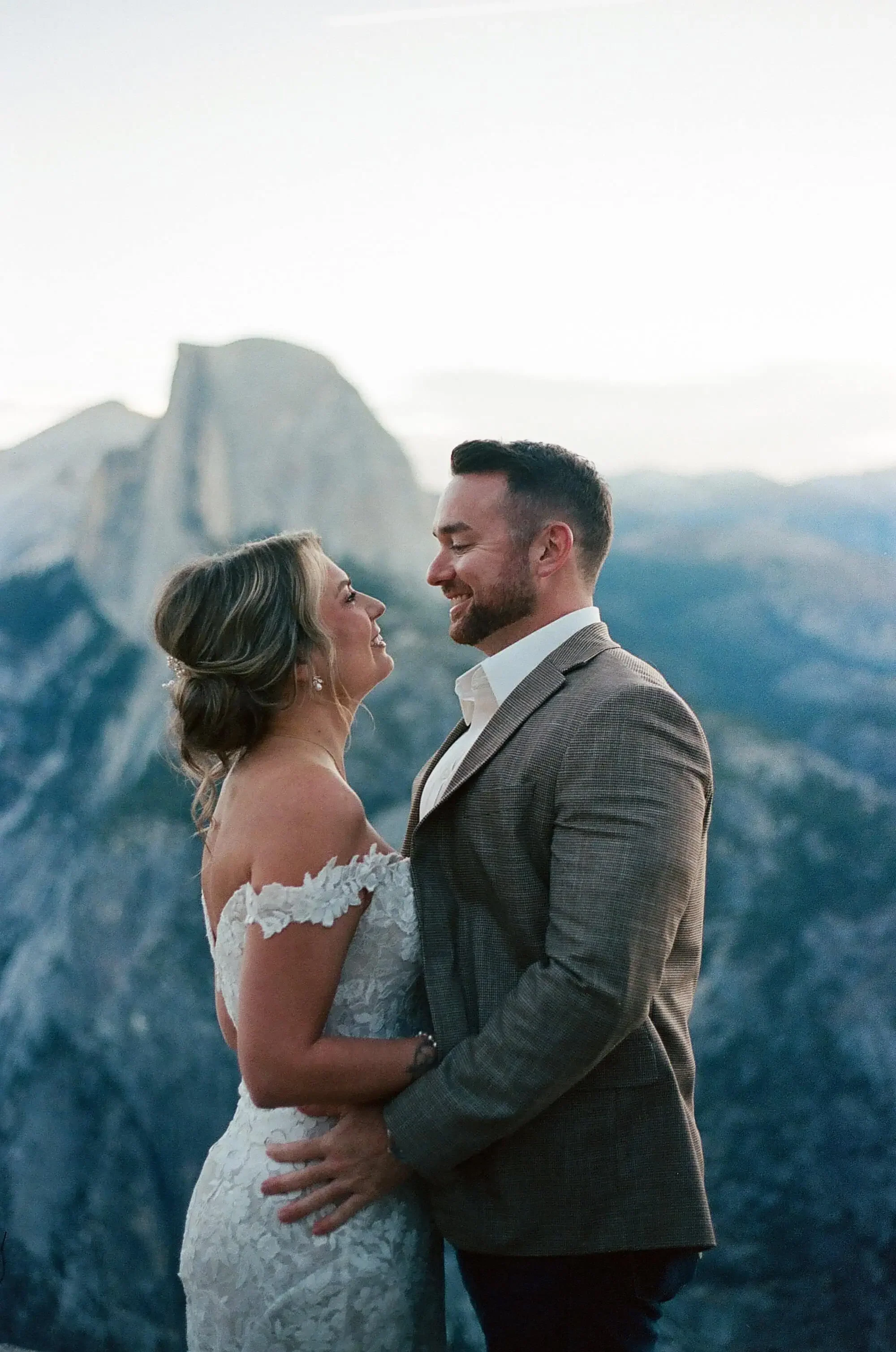
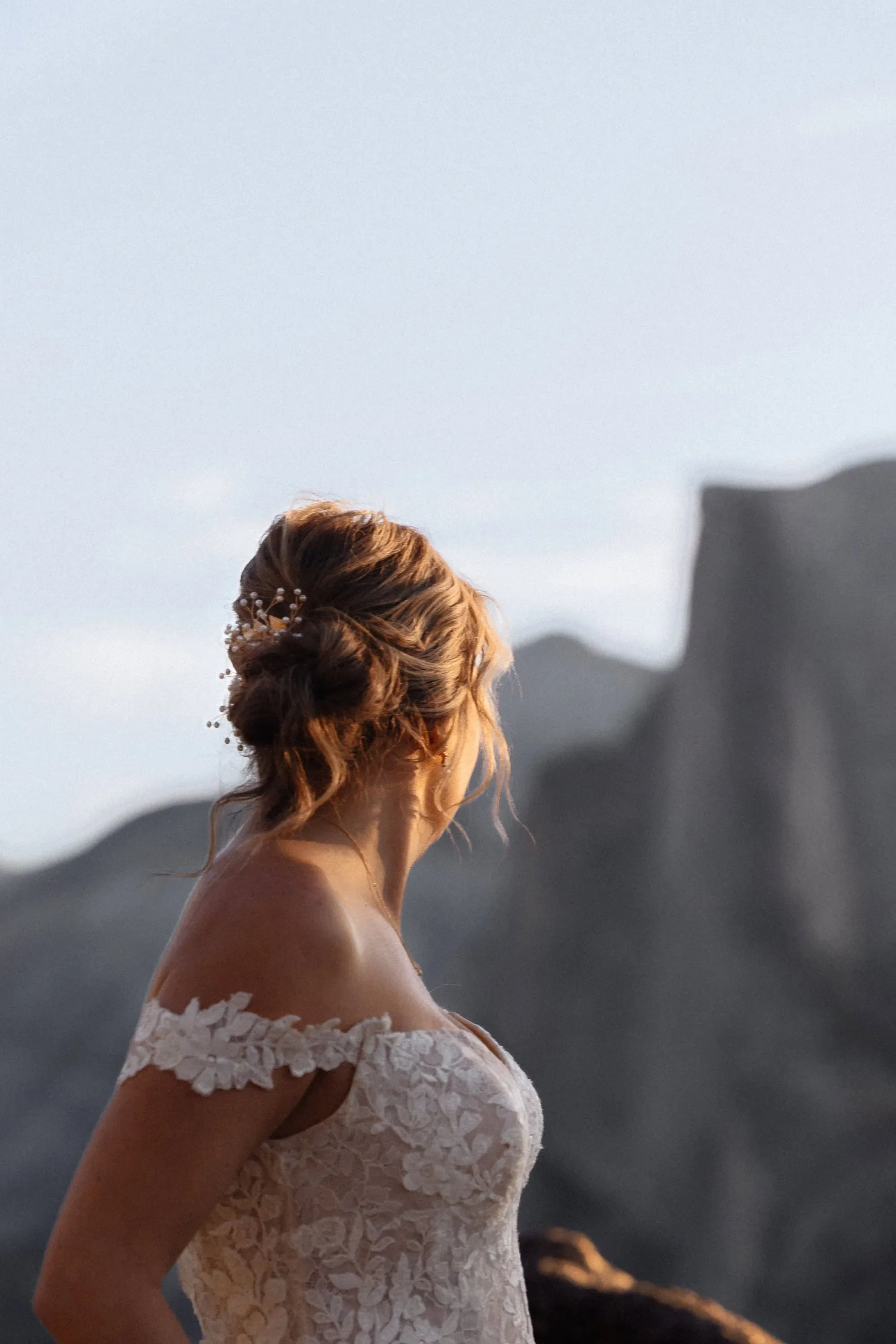
A quiet moment before the ceremony, immortalized on 35mm film.
The Bottom Line on Yosemite Elopement Logistics
Most of what goes wrong in Yosemite is not cinematic. It is not some dramatic worst-case scenario, but instead the sort of friction that chips away at your experience if no one has planned for it. The bottom line is that Yosemite does not require perfection. It requires thought. The days that feel the most spacious and grounded are usually the ones where someone has already accounted for the boring parts, so that the two of you are free to spend your actual energy on the reason you are here in the first place.
Frequently Asked Questions About Yosemite Elopement Logistics
-
Yosemite elopements can feel crowded IF they are not planned intentionally. The park is highly visited during peak times and seasons, and popular areas are busier at certain times.
However, timing, location choice, and how you move through the park make a significant difference. Early mornings, well-chosen locations, and minimizing unnecessary transitions all reduce crowd exposure and keep the day feeling calm.
You will likely still encounter other visitors, but with a clear plan, your experience can still feel grounded, personal, and focused on each other.
-
Yes, you need a permit to have a ceremony in Yosemite National Park. The park requires a special use permit for all weddings and elopements. Read more about permitting here.
-
No, cell service in Yosemite is limited and often unavailable. Many areas of the park have little to no reliable coverage.
Because of this, plans need to be confirmed ahead of time. Download maps, set clear meeting points, and avoid relying on real-time communication.
When you plan ahead for no service, it stops being a source of stress.
-
The best time for a Yosemite elopement depends on your priorities. Early mornings typically offer fewer crowds and a calmer pace.
Evenings can have beautiful light but usually comes with more visitors. Creativity and off-center stage exploration can mitigate sunset crowds. Midday is generally the busiest and least flexible.
Choosing the right time comes down to balancing light, privacy, and how you want the day to feel.
-
Yosemite road closures are seasonal and generally predictable. Higher elevation roads close in winter and reopen in late spring or early summer depending on snowpack.
Planning starts with understanding what is typically accessible during your timeframe. From there, locations and timelines are built around those conditions.
-
A smooth Yosemite elopement comes down to clear logistics and realistic timing. Most issues come from small breakdowns like unclear meeting points, underestimated drive times, or relying on cell service.
A solid plan uses precise locations, built-in buffer time, and simple communication instructions for everyone involved.
When those pieces are in place, the day feels calm and easy instead of reactive.